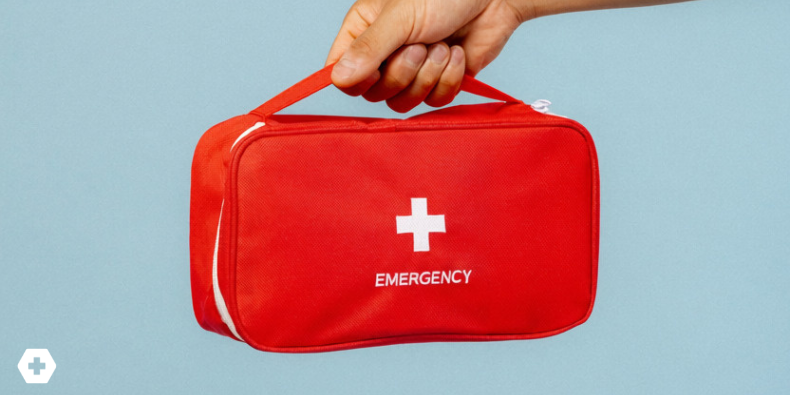
Prepared for the Unexpected: Emergency Preparedness in Urgent Care

It is 3:15 PM on a Tuesday. Your waiting room is overflowing, you have five charts to finish, and all of your patient rooms are full. Suddenly, your front desk colleague knocks on the door with a look that says, “I need your help now.” A patient just walked into your urgent care and is complaining of crushing chest pressure and is diaphoretic.
If you work in urgent care, this scenario probably sounds familiar and makes your heart skip a beat. We operate in a unique clinical space that’s designed primarily to see low-to-moderate acuity patients, that is, until the high-acuity patient walks through the door.
Because urgent care centers operate with fewer resources than a hospital, a lean medication formulary, and small clinical teams, handling a critical presentation requires a system built on preparation. When a critical situation unfolds, there is no trauma room, no specialists, no in-house crash team, ventilator, or cardiac cath lab down the hall.
Our primary objective in urgent care is straightforward: recognize, stabilize, and transfer. To execute that seamless transfer when every second counts, a clinic needs a firm grasp on three foundational elements: equipment, in-office medications, and team roles.
Equipment and Visual Aids: What You Have vs. What You Need
When a patient deteriorates, hunting through unorganized drawers for an appropriately sized bag-valve mask is the last thing anyone wants to do. Knowing what you have is essential for rapid resuscitation.
Every urgent care toolkit must cover the ABC essentials:
-
Airway & Oxygen: Oxygen tanks, nasal cannulas, non-rebreather masks, adult and pediatric bag-valve masks (BVM), and Yankauer suction tools.
-
Circulation & Transport: Automated External Defibrillators (AED), IV start supplies, normal saline or Lactated Ringer’s, backboards, and cervical collars.
-
Monitoring & Assessment: Glucometer, adult- and pediatric-sized pulse oximeters and blood pressure cuffs.
To streamline response times, maintain pre-assembled, target-specific emergency kits for high-risk presentations:
-
Anaphylaxis
-
Cardiac events
-
Hypoglycemia
-
Pediatric emergencies
-
Opioid overdose
Complement these physical tools with visible cognitive aids, such as wall-mounted Advanced Cardiovascular Life Support (ACLS) algorithms, Pediatric Advanced Life Support (PALS) pocket guides, and standardized weight-based pediatric dosing charts. Placing these in direct line of sight removes unnecessary mental math during high-stress moments.
In-Office Medications: The Essential Toolkit
Urgent care formularies are intentionally lean, but the emergency shelf must be stocked with medications that bridge the gap between patient arrival and EMS transport.
Key emergency medications to keep accessible, organized, and routinely stocked include:
-
Cardiac & Vascular: Aspirin, sublingual nitroglycerin, and IV fluids (0.9% Normal Saline or Lactated Ringer’s).
-
Respiratory: Albuterol nebulizer solutions and dexamethasone.
-
Anaphylaxis & Allergy: Epinephrine auto-injectors or vials, plus antihistamines like diphenhydramine or cetirizine.
-
Overdose & Endocrine Emergencies: Naloxone nasal spray and oral glucose gel.
-
First-Line Analgesics/Antipyretics: Oral options like ibuprofen and acetaminophen.
A simple, critical clinic rule applies: every member of the clinical staff must know the exact location of emergency equipment and medications. A missing key to a locked cabinet or an unfamiliar drug tray can waste irreplaceable minutes during an active resuscitation.
Defining Roles: The RAPID-T Framework
An emergency in urgent care requires structured team choreography. The RAPID-T framework keeps everyone on the same page: Recognize, Activate, Primary Survey, Immediate Intervention, Determine Response, and Transfer.
To make this operational, clear roles must be established:
Front Desk: Spot & Alert
-
Recognize & Prioritize: Identify ill-appearing patients or red-flag symptoms at check-in and move them ahead of routine queues.
-
Notify & Activate: Alert the clinical team immediately and call 911 when indicated, relaying critical details to dispatchers.
-
Communicate: Keep waiting room patients informed if care delays occur.
Support Team (MAs, LPNs, RNs): Room & Record
-
Room & Evaluate: Move the patient directly to an evaluation room and obtain vital signs immediately.
-
Alert & Assist: Report critical vital sign abnormalities to the clinician and assist directly with interventions or drug administration.
-
Record: Maintain real-time documentation of vital sign trends, medication timestamps, and patient responses.
Team Lead (Clinician: PA, NP, MD, DO): Lead & Delegate
-
Evaluate & Manage: Perform a rapid primary assessment, manage airway or cardiovascular interventions, and direct overall clinical care.
-
Delegate: Assign a support team member as a designated "runner" to retrieve gear, call 911, or talk to dispatch.
-
Stay at the Bedside: Stay at the patient's side and lead the stabilization effort.
Practice Makes Preparedness
Systems only work if they are regularly tested. Even the best equipment lists fall flat if staff review them only during orientation.
A realistic and sustainable schedule for urgent care teams includes:
-
Monthly Equipment Audits: Check expiration dates on emergency kit medications, inspect AED pads, and test suction machines and oxygen tank levels.
-
Quarterly Mock Code Drills: Run 15-minute simulated scenarios (e.g., an anaphylaxis walk-in or pediatric hypoglycemia) during a morning huddle.
Practicing rapid handoffs and emergency roles builds muscle memory. When a high-acuity case walks through your doors, a prepared team transforms panic into organized, life-saving care.
References:
-
LeBlanc C, Murray J, et al. Review of emergency preparedness in the office setting: How best to prepare based on your practice and patient demographic characteristics. Can Fam Physician. 2019;65(4):253-259. PMID: 30979755
-
Rothkopf L, Wirshup M. A practical guide to emergency preparedness for office-based family physicians. Fam Pract Manag. 2013;20(2):13-18. PMID: 23547609
-
Hippo Education. Emergency Preparedness: Equipment, Medications and Roles. Urgent Care Bootcamp. Published 2026. https://www.hippoeducation.com/

Practice-Changing Education
Experience education that goes beyond theory. Explore Hippo Education’s offerings below.