Featuring insights from Dr. Stephanie Wappel, Pulmonologist and Sleep Medicine Specialist
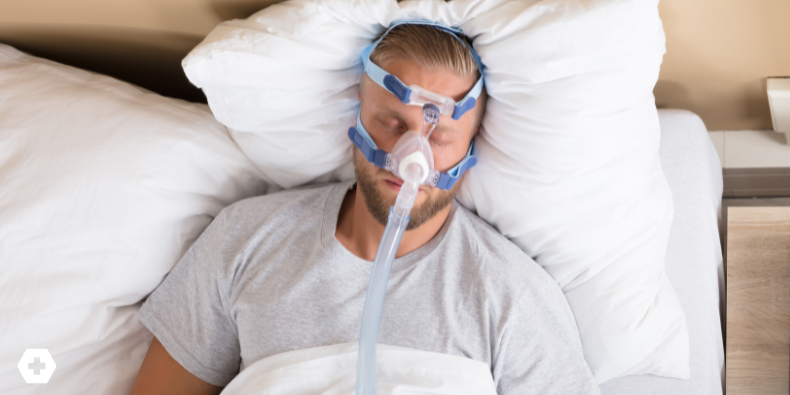
Obstructive sleep apnea (OSA) is a quintessential bread-and-butter primary care diagnosis. It’s common, screenable, highly treatable, and tightly intertwined with so many chronic conditions primary care clinicians manage every single day, from resistant hypertension to mood disorders. But with shifting landscapes in diagnostic criteria, testing options, and coverage rules, even this classic primary care diagnosis can feel hard to keep up with.
There simply aren't enough sleep specialists in the world to care for the vast population of patients living with OSA, which is the most common form of sleep-disordered breathing. Primary care clinicians are in a great position to diagnose and treat this condition before it affects patients’ long-term cardiometabolic health and overall quality of life.
Defining OSA: AHI and the Hypopnea Dilemma
OSA is diagnosed when a patient demonstrates an Apnea-Hypopnea Index (AHI) of 5 or more events per hour on a validated sleep study, with one important caveat. When the AHI falls between 5 and 14 events per hour (considered mild OSA), the patient must also experience symptoms such as excessive daytime sleepiness or witnessed apneas to establish the diagnosis. Once a patient demonstrates an AHI of 15 or more events per hour, we can diagnose OSA whether or not the patient is experiencing symptoms.
Let’s drill down a bit further and define both apnea and hypopnea. Apnea is fairly straightforward: a total airway obstruction with 90-100% reduction in airflow for at least 10 seconds, roughly equivalent to two breaths. Categorizing hypopneas is a bit trickier.
Historically, an obstructive hypopnea required a 30% to 90% reduction in airflow for at least 10 seconds accompanied by a 4% oxygen desaturation. In 2012, the American Academy of Sleep Medicine updated its standard to be more inclusive, defining a hypopnea as a drop in airflow associated with either a 3% oxygen desaturation or an arousal from sleep. This subtle shift allowed clinicians to detect more clinically significant OSA in women, younger adults, and individuals with lower body mass indices (BMIs), who are often less likely to experience major oxygen desaturations or arousal from sleep.
Despite this more inclusive classification, coverage for treatment options hasn’t completely caught up. Many third-party payers, including the Centers for Medicare & Medicaid Services, still enforce the legacy 4% desaturation criteria to authorize CPAP coverage. As a result, sleep labs often report two separate numbers, allowing for both the 3% and 4% cutoffs. In the current landscape, a patient meeting modern clinical criteria under the 3% rule might still face insurance denials depending on their coverage plan.
Risk Factors and Endotypes
Obesity remains the strongest risk factor for OSA, with an estimated 40% of people with a BMI over 30 kg/m² having OSA. A large neck circumference is also a risk factor for OSA, specifically a neck circumference of >17 inches in men and >16 inches in women. OSA prevalence increases with age regardless of gender, and it increases after menopause in women.
The hallmark of OSA is upper airway instability during sleep, leading to repetitive collapse, brief hypoxemia, sleep fragmentation, and increased adrenergic activity. While excess adipose tissue in the neck and oropharynx is the primary driver, not every patient with OSA has excess weight. Patients with OSA can have other, often complex endotypes including low thresholds for sleep arousals and delayed upper airway dilator muscle engagement. While many of these patients are managed by a sleep specialist, it’s helpful for primary care clinicians to know that OSA risk factors go beyond excess weight.
Nocturnal GERD and Nocturia? Think OSA
The most classic OSA symptoms are loud, habitual snoring, witnessed apneas during sleep, and excessive daytime sleepiness. But other subtle clinical presentations should make front-line clinicians consider OSA. When patients present with persistent nocturnal gastroesophageal reflux or even nocturia, OSA could be an underlying cause. If conventional, symptom-targeted treatments don’t work for nocturnal acid reflux or needing to urinate throughout the night, OSA could be the culprit.
To Screen or Not to Screen?
The United States Preventive Services Task Force (USPSTF) says there is insufficient evidence to recommend routine screening for OSA in asymptomatic adults. Despite the USPSTF’s position, several societies such as the American Heart Association recommend screening certain high-risk populations, including patients with poorly controlled HTN, heart failure, pulmonary hypertension, nocturnal angina, or recurrent atrial fibrillation. Expert consensus recommends screening pregnant patients with a BMI greater than 30 or a history of HTN or diabetes as well.
In terms of screening tools, the most sensitive and widely used tool is the STOP-BANG questionnaire. A patient is considered high-risk if they report “yes” to 3 or more of the following criteria:
In-Lab vs. Home Sleep Apnea Testing
Once a patient’s STOP-BANG score points toward OSA, the next step is choosing between an in-lab polysomnogram (PSG) and a Home Sleep Apnea Test (HSAT).
An in-lab PSG is the diagnostic gold standard. It includes full neurophysiological monitoring throughout the night, including electroencephalogram (EEG), airflow, oxygen, and electrocardiogram (ECG). It is strongly indicated for patients with significant underlying cardiovascular disease, lung disease, severe insomnia, or suspected non-OSA sleep disorders like narcolepsy or periodic limb movement disorder.
But for fairly healthy patients who have a high pre-test probability of moderate-to-severe OSA, an HSAT can be a much more convenient and desirable option. Remember that an HSAT is not a full sleep study; since there are no EEG leads on the patient’s head or EKG leads on the patient’s chest, the HSAT can’t detect physiological arousals or help diagnose other sleep disorders. Crucially, a negative HSAT in a patient with high clinical suspicion for OSA is considered non-diagnostic, so that patient will need to follow up with an in-lab study to definitively rule out OSA.
Starting the Management Journey
While the gold standard for treatment is continuous positive airway pressure (CPAP), lifestyle adjustments are so important in helping patients with OSA. Optimizing sleep hygiene, maintaining a consistent sleep schedule, avoiding alcohol (which decreases upper airway muscle tone) within three hours of bedtime, and limiting late-evening fluid intake can make an enormous difference in a patient’s sleep quality. If a patient has excess weight, achieving a healthy weight can also help address some root causes of OSA.
If more primary care clinicians can feel comfortable recognizing the signs and symptoms of OSA, screening appropriate patients using the STOP-BANG questionnaire, ordering appropriate sleep studies, and understanding how those studies report the AHI (and the 3% vs. 4% cutoff for hypopneas), we can make a big difference in improving our patients’ quality of life and health overall. Tune in to Primary Care RAP for a dedicated OSA 101 series for primary care clinicians, featuring an expert in sleep medicine.
References:
-
Sönmez I, Vo Dupuy A, Yu KS, Cronin J, Yee J, Azarbarzin A. Unmasking obstructive sleep apnea: estimated prevalence and impact in the United States. Respir Med. 2025. doi:10.1016/j.rmed.2025.108348