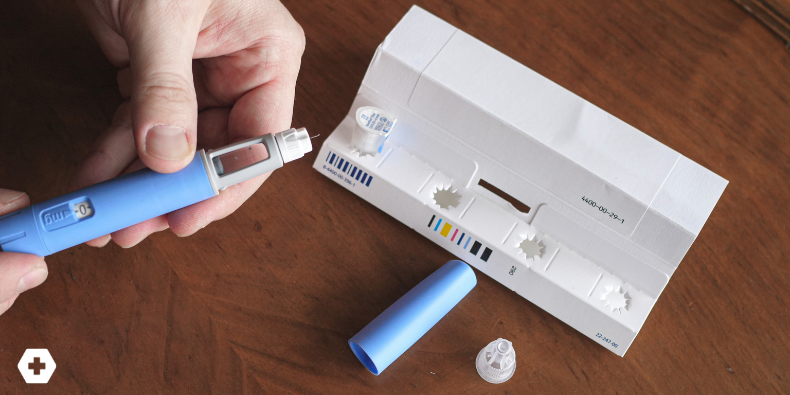
If you work in any specialty of medicine, chances are you’re talking about GLP-1 prescriptions for weight loss multiple times a day. Maybe you're explaining why Wegovy isn’t covered, managing titration schedules, or helping a patient understand why they've regained weight after stopping. It's a challenging landscape, and we’re all trying to keep up.
It’s a fast-moving world out there — new FDA approvals, new insurance rules, and a steady stream of patient questions. We’ll break down what matters most in day-to-day GLP-1 prescribing, from indications to insurance pitfalls to what’s next on the horizon.
(This info is current at the time of publishing. Always double-check the most current FDA label or corporate press release — indications, titrations, and payer coverage are changing rapidly.)
FDA-Approved Medications and Indications (As of Summer 2026)
Let’s start with a quick rundown of the major players and what they’re actually approved to treat:
Ozempic (semaglutide, available in both injectable and oral forms)
- Type 2 diabetes mellitus, adjunct to diet and exercise
- To reduce major adverse cardiovascular events (MACE: Cardiovascular death, nonfatal myocardial infarction, stroke) in adults with Type 2 diabetes mellitus and established cardiovascular disease
- Approved to reduce the risk of chronic kidney disease progression and cardiovascular death in Type 2 Diabetes mellitus and chronic kidney disease
- Titration (oral): Start at 1.5 mg daily for 30 days. Increase to 4 mg daily for 30 days. If further glycemic control is required, escalate to 9 mg daily.
- Titration (injectable): Start at 0.25 mg weekly for 4 weeks. Escalation occurs every 4 weeks: 0.5 mg → 1.0 mg → 2.0 mg weekly (maximum dose)
Mounjaro (tirzepatide injection)
- Type 2 Diabetes mellitus, adjunct to diet and exercise
- Approved (August 2026) to reduce the risk of MACE in adults with type 2 diabetes who are at high risk for cardiovascular disease
- Titration: Start at 2.5 mg weekly for 4 weeks. Escalate by 2.5 mg increments every 4 weeks as tolerated: 5 mg → 7.5 mg →10 mg →12.5 mg → 15 mg weekly
Wegovy (semaglutide, available in both injectable and oral forms)
- Chronic weight management in adults with obesity (BMI≥30) or overweight (BMI≥27), plus at least one weight-related comorbidity
- Adolescents ≥12 with obesity
- To reduce the risk of major adverse cardiovascular events in adults with obesity or overweight and established cardiovascular disease
- Noncirrhotic metabolic-associated steatohepatitis (with F2–F3 fibrosis) in adults
- Titration (injectable): Start at 0.25 mg weekly for 4 weeks. Escalation occurs every 4 weeks: 0.5 mg → 1.0 mg → 1.7 mg → 2.4 mg weekly (maintenance dose).
Zepbound (tirzepatide injection for weight loss)
- Chronic weight management in adults with obesity or overweight, plus at least one weight-related comorbidity
- Moderate-to-severe obstructive sleep apnea (OSA) in adults with obesity
- Titration: Start at 2.5 mg weekly for 4 weeks. Escalate by 2.5 mg increments every 4 weeks as tolerated: 5 mg → 7.5 mg →10 mg →12.5 mg → 15 mg weekly
- Pro-tip: Intermediate doses (7.5 mg, 12.5 mg) are often treated by insurers as bridge doses and may only be covered for a single 4-week period every 12 months.
Foundayo (oral orfoglipron)
- Chronic weight management in adults with obesity or overweight, plus at least one weight-related comorbidity
- Once daily, non-peptide "small molecule" GLP-1
- Can be taken any time of the day, with or without food or liquid
- Titration: Start at 0.8 mg daily for 30 days. Escalate every 30 days as tolerated: 2.5 mg daily → 5.5 mg daily (lowest maintenance dose). Depending on therapeutic response, further titration can occur to 9 mg → 14.5 mg → 17.2 mg daily
Insurance Coverage Realities
Even when the indications are met, insurance coverage for GLP-1s isn’t guaranteed. Plans vary widely, even within the same insurer. A few practical tips to consider when navigating insurance coverage and prior authorizations.
- Encourage patients to verify coverage before their visit. This saves time and frustration (for both the patient and the clinician).
- Expect prior authorization requests. Most plans want documentation of prior weight loss attempts (diet apps, coaching, nutrition programs, etc.) and comorbidities
- Look into the Medicare Bridge program for patients with Medicare coverage
- If insurance doesn’t cover it, self-pay programs for GLP-1 meds may be an option.
Know what documentation entails:
- For CVD prevention (Wegovy): Document prior MI, stroke, PAD, or revascularization.
- For MASH (Wegovy): Document F2–F3 liver fibrosis (imaging, biopsy, or scoring systems).
- For OSA (Zepbound): Include a sleep study showing AHI, REI, or RDI >15, plus evidence that PAP isn’t working or tolerated.
*Note that requirements differ by payer — always check the latest criteria for GLP-1 prior authorization to avoid delays.
Compounded Medications: A Word of Caution
Many patients are accessing GLP-1s through online programs that use compounded versions.
- These are not FDA-approved and are not quality-controlled like commercial drugs.
- Risks include inaccurate dosing, contamination, and poor storage.
- Compounded meds should only be considered when there is a national drug shortage and no approved product is available.
Missed doses?
- Wegovy injection: If the next dose is >2 days away, take the missed dose ASAP; if <2 days, skip. If missed for >2 weeks, consider restarting titration schedule.
- Wegovy pill: Skip the missed dose entirely and take the next dose the following morning. Never take two doses at once.
- Zepbound: Take missed dose within 4 days; otherwise, skip and resume schedule.
- Foundayo: Take as soon as remembered on the same day. If remembered the next day, skip the missed dose and resume normal timing. Do not double up doses. If ≥7 consecutive daily doses are missed, re-initiate dosage escalation at a lower dose to avoid rebound GI distress.
Some patients space out doses (every 10–14 days) to cut costs. This is not guideline-based and may reduce efficacy.
Do Patients Need to Stay on These Forever?
We don’t have a definitive answer yet, but here’s what we do know:
- Using GLP-1s for at least 12 months improves outcomes
- Stopping often leads to weight regain. A 2022 trial showed patients regained two-thirds of their weight loss within one year of stopping semaglutide
Other Key Considerations
Pre-op guidance:
- Most patients can continue taking their glucagon-like peptide-1 (GLP-1) receptor agonists before elective surgery.
- Risk of aspiration is higher during the escalation phase and while experiencing GI side effects; consider delaying elective surgery.
- For high doses, a 24-hour liquid diet before surgery can reduce aspiration risk.
- Patients are often advised to hold their GLP-1 meds for one week prior to a colonoscopy, since it can interfere with bowel prep.
Oral Contraceptives:
- Tirzepatide (Zepbound/Mounjaro) may reduce efficacy due to slowed gastric emptying, especially during initiation and escalation.
- Recommend switching to a non-oral contraceptive or adding a barrier method for 4 weeks after starting or increasing the dose.
Pregnancy:
- Discontinue semaglutide, tirzepatide, or orforglipron at least 2 months before a planned pregnancy.
- If an unplanned pregnancy occurs, stop the medication immediately.
Dietary/Lifestyle Modifications:
- Recommended for everyone regardless of indication for use
- Smaller, more frequent meals - may need to "eat by the clock"
- Prioritize protein and fiber, maintain adequate hydration
- Want to know more? Check out this blog on GLP1 medications and dietary counseling.
These medications are transforming how we treat diabetes, obesity, and cardiovascular risk. But as frontline clinicians, we’re left to translate complex approvals and payer requirements into something workable for patients. We’re in the prior-authorization trenches with you, and we’ll keep updating you with what’s next.