Erin Pressley, PA-C serves as a Senior Medical Editor for Hippo Education's UC Video and Written products. She attended South College Physician Program in Knoxville, Tennessee and has more than a decade of experience in emergency medicine, urgent care, telemedicine, and PA education.
Occupational medicine is rarely a "one size fits all” approach. For clinics and clinicians operating across state lines, managing workers' compensation isn't just a clinical challenge; it is a regulatory maze.
Understanding the "Direction of Care" is the first step in navigating this complexity. In workers' comp, this refers to who has the legal right to choose the treating clinician: the employer or the employee.
The Three Pillars of Direction of Care
To simplify the landscape, we can categorize states into three primary models. Knowing which category a state falls into dictates your initial intake process and your communication strategy with the insurance carrier.
How to Use the Map:
Easily identify which states are Employee Choice, Employer Choice, or Panel-driven with our color-coded key
Simply hover your cursor over any state to see the direction of choice and quick notes
Every state includes a direct link to that state’s official Workers' Compensation Board or Commission website for the most up-to-date statutory language
1. Employee-Choice States
In these jurisdictions, the power rests with the injured worker. From the moment the injury occurs, the employee has the right to select a licensed clinician (within state guidelines) to lead their care.
The Nuance: While the employee chooses, they are often limited to a "one-time change" of physician. If they want to switch a second time, they usually need approval from the state board or the insurer.
Examples: Alaska, Delaware, Louisiana, Maryland, and Washington
2. Employer-Choice States
In these states, the employer (or their insurance carrier) has the "right of first direction." They can designate a specific clinic or clinician to treat the injured worker.
The Nuance: If an employee seeks care outside of the employer’s chosen clinician without authorization, the insurer may not be liable for those medical bills. However, many of these states allow the employee to request a change after a certain period of time.
Examples: Arkansas, Florida, Iowa, Missouri, and New Jersey
3. Panel States (The Hybrid Model)
Panel states offer a middle ground. The employer must provide a "panel" or a list of approved clinicians, and the employee must choose one from that list.
The Nuance: If the employer fails to post the panel or provide the list at the time of injury, the choice may revert to the employee.
Examples: Georgia, Tennessee, Pennsylvania, and Virginia
Go Deeper with Hippo Education’s Occupational Medicine Bootcamp
Hippo Education’s Occupational Medicine Bootcamp is an expert-led, video-based course designed to provide clinicians with a foundation for managing patients with work-related injuries and illnesses. Through over 40 conversational lessons, experienced clinicians share practical "pearls" on patient management, setting work restrictions, navigating occupational medicine exams such as fit-for-duty and surveillance, and interpreting common occupational medicine screenings, like audiometry.
Whether you treat the occasional injured worker or manage occupational cases daily, this course bridges the gap between clinical knowledge and the nuanced demands of workplace medicine.
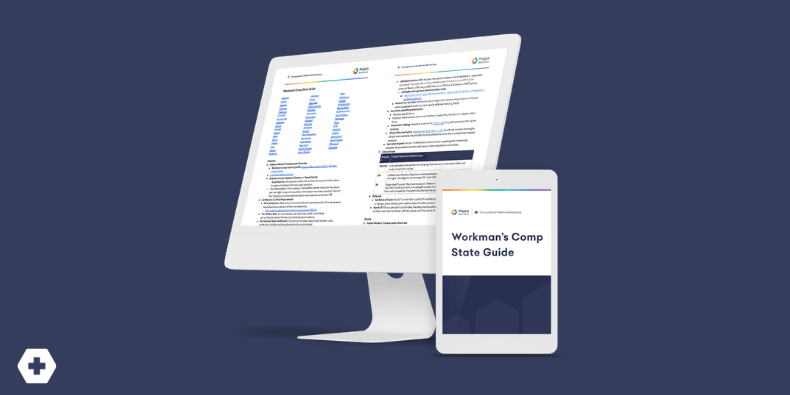
The bootcamp includes a suite of rapid-reference tools, such as printable clinical tables, slide decks, and a comprehensive 50-State Workers’ Compensation Guide. This bonus state guide provides you with quick reference notes on the often-frustrating landscape of state-specific laws, forms, and deadlines. It’s a streamlined, "in-the-trenches" guide, regardless of which state you practice in.
Why This Matters for Your Bottom Line
While we don't manage billing, we know that clinical compliance is the key to helping it run smoothly. The map and guide empower you with the state-specific knowledge you need. By aligning clinical documentation with state expectations, you can reduce denied claims and accelerate your patient’s journey back to health.
If you work in any specialty of medicine, chances are you’re talking about GLP-1 prescriptions for weight loss multiple times a day. Maybe you're explaining why Wegovy isn’t covered, managing titration schedules, or...


 Related Blog Posts