It’s every clinician’s nightmare: a pediatric patient in full-blown anaphylaxis, your team scrambling to find the epinephrine vial, draw it up, calculate the pediatric dose, triple-check the concentration — oh, and do it all in a resource-limited setting.
What if that whole process could be simplified?
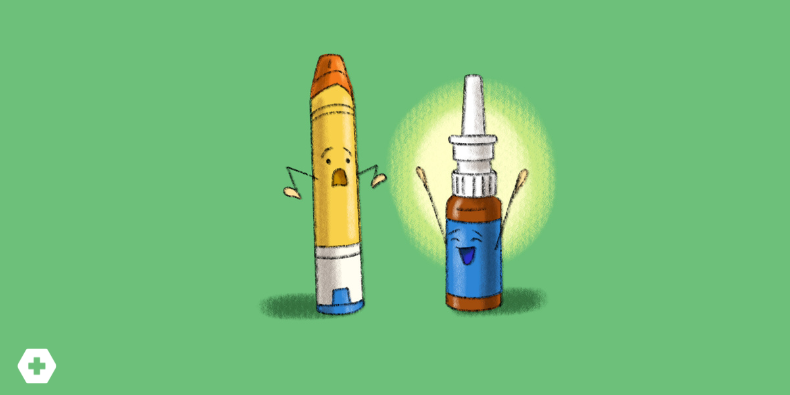
Enter intranasal epinephrine. Yep, epi up the nose. No needles. No math. No delay.
In a recent conversation with allergist and immunologist Dr. Kiranjit Khalsa, we explored how this new delivery method could revolutionize the way we manage anaphylaxis, especially in outpatient and urgent care settings. Here are three big takeaways from that discussion.
1. Intranasal Epinephrine Works Fast and Effectively
The 2mg intranasal dose delivers the exact same medication as your standard intramuscular (IM) epinephrine auto-injector, just via the nose. And it kicks in just as quickly: within one minute. Blood levels of epinephrine achieved with the nasal spray are comparable to those delivered via IM injection.
Even better? You don’t need to worry about whether your patient is upright, alert, or congested. The spray doesn’t require inhalation, works through the nasal mucosa even if the patient is lying down or unconscious, and can power through a stuffy nose like a champ.
And yes, you can spray a second dose into the same nostril if needed, five minutes after the first.
2. This Is a Game-Changer for Pediatric Anaphylaxis
The stress of calculating pediatric epi doses in a high-stakes situation is real. But with intranasal epinephrine, dosing is simplified and standardized. As of the writing of this blog, studies are ongoing.
-
2mg dose: for kids 30kg and up (typically ages 7+)
-
1mg dose: being studied for children 15–30kg, but not yet widely recommended
Translation: For most school-aged kids and teens, you don’t have to do mental math mid-crisis. Just grab the nasal spray and administer.
Dr. Khalsa called this shift a "massive relief" for clinicians, especially when managing pediatric emergencies where time and clarity matter most.
3. Needle-Free Means More People Will Actually Carry and Use It
Needle anxiety is a legitimate barrier to care. In one survey from the Allergy & Asthma Network:
-
91% of participants said they’d consider using nasal spray epinephrine instead of a traditional injector
-
82% said they’d prefer needle-free over needle-based delivery
-
80% said they’d be more likely to carry a nasal spray because it’s smaller and more discreet
For patients, this can mean improved adherence. For us, it means quicker access to life-saving treatment. It’s also worth noting that the nasal device has a longer shelf life (2–2.5 years) and better heat tolerance — just don’t leave it in a hot car or let it freeze.
What to Watch Out For
-
Do not prime or reuse the device
-
Expect mild, self-limited side effects like nasal discomfort, sneezing, or congestion
-
This isn’t a full replacement yet—IM epinephrine is still necessary for some pediatric patients under 7 or weighing less than 30kg
Practice Pearls
Our patients do NOT need to inhale the epinephrine for it to work.
Do NOT prime or reuse the administration device.
For more information, subscribe to Urgent Care Reviews and Perspectives and listen to the podcast episode, "IM Epi out, IN is in for anaphylaxis!"


 Related Blog Posts