What’s the Deal with Weighted Vests?

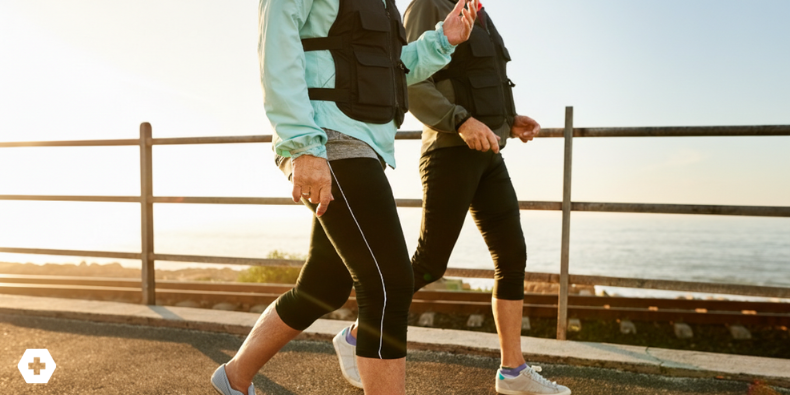
If you’ve been outside in the past six months (or anywhere on social media), you’ve probably seen someone power-walking in a weighted vest. Weighted vests are no longer just for elite athletes or military fitness tests. These days, they're showing up on your patients, your friends, maybe even on you. Weighted vests are said to boost bone density, preserve muscle, improve balance, and even help with weight loss. But are these claims backed by real science, or just social media swagger?
The Bone Density Pitch: More Load, Less Loss?
Weighted vests aren’t new. Research on their effect on bone density goes back over 30 years. The idea is simple: adding external weight increases the mechanical load on the skeleton, which, theoretically, stimulates bone formation.
The evidence suggests a possible benefit, but it’s not the vest alone that makes the difference. What you do while wearing it seems to count more. Strength training, jumping, and weight-bearing movement appear to drive bone health benefits, whether or not a vest is involved. Let’s take a look at the available evidence.
A 2025 randomized trial in JAMA Network Open studied 150 older adults with obesity who had intentionally lost ~10% of their body weight. Daily weighted vest use did not prevent weight loss-associated bone loss at the hip. The effect of weighted vest use on skeletal health outcomes was largely similar to traditional resistance exercise training.
A 2000 study in The Journals of Gerontology followed 18 postmenopausal women over 5 years. Half did jumping exercises wearing a weighted vest; the others stayed active but didn’t jump. The jumping group maintained their hip bone density, suggesting benefit, but this was high-impact activity, not just walking.
A 2013 study in Rheumatology International found that treadmill walking with a weighted vest improved balance and markers of bone formation compared with walking without a vest. Again, the sample was small, just 36 women.
While the concept of exercising with increased axial load from weighted vests makes biomechanical sense, the data so far suggest that movement type matters more than added weight. Think of the vest as a tool, not a treatment.
What About Weight Loss?
Exercising with a weighted vest is an emerging area of interest. Two recent studies suggest that weighted vests may support fat loss and muscle preservation, but only when worn for many hours each day. These benefits don’t come from a quick walk around the block; they require consistent, extended use.
A 2025 BMC Medicine study randomized 59 participants to wear either a heavy vest (11% of body weight) or a light vest (1% of body weight) for 8 hours a day, 5 days a week, for 5 weeks. The heavy vest group had reduced fat mass and increased lean mass, but without a change in total body weight.
Another 2025 study in the International Journal of Obesity examined older adults with obesity and osteoarthritis participating in a structured weight-loss program. Participants in the vest group wore the vest up to 10 hours daily, with weights adjusted weekly to replace all lost weight (up to 15% of baseline). After 2 years, the vest group regained only half as much weight as the control group. Uniquely, they maintained their resting metabolic rate despite caloric restriction.
Consistent use of weighted vests may support fat loss and muscle preservation, but the available studies are small.
Are Weighted Vests Safe?
Overall, yes. But they’re not totally risk-free. In the largest RCT to date (INVEST in Bone Health), minor musculoskeletal side effects, like joint pain or soreness, were more common in the vest and resistance training groups than in the control group. However, no serious adverse events were attributed to vest use. So, if a patient has joint problems, poor balance, or a history of falls, this might not be the best tool. Otherwise? Pretty low risk.
Should We Recommend Them?
After diving into the research, I concluded that studies are small and ongoing, so the dramatic claims about osteoporosis and weight loss are likely overstated. If asked by a patient, here’s how I’d respond: “Weighted vests might help with bone health and body composition, but the evidence is still early. If it’s motivating you to move more and you're not in pain, go for it. Just don’t rely on the vest alone — jumping, walking, and strength training are all beneficial for both bone health and weight loss.”
If recommending a weighted vest, consider starting with one that’s about 10% of body weight and wearing it during daily walks or chores, not just workouts. This is an area of emerging research, so keep an eye out for new evidence in the field of weighted vests!

Practice-Changing Education
Experience education that goes beyond theory. Explore Hippo Education’s offerings below.