CGMs Are No Longer Just for “The Sickest” Diabetics. Here’s What Changed.

There was a time when prescribing continuous glucose monitors (CGMs) felt like an impossible ask unless your patient had type 1 diabetes or was on multiple daily insulin injections. Between the mountains of prior authorization paperwork and rigid insurance requirements, most of our patients with type 2 diabetes didn’t qualify — even if they were desperate for better data or a clearer picture of their blood sugar trends.
But all of that is changing.
Recent federal and state legislation has expanded CGM access for patients on Medicare and Medicaid, and many private insurers are following suit. For primary care clinicians, that means we need to rewire our mental algorithms: CGMs are no longer a last-resort tool. They’re increasingly first-line.
Who Qualifies for a CGM Now?
The 2025 ADA Standards of Care recommend CGMs for:
-
All youth and adults with diabetes who are on insulin
-
Adults with type 2 diabetes, even if they’re not on insulin.
In other words, this tool is no longer reserved for endocrinology clinics or high-complexity cases.
Unfortunately, whether a patient can get a CGM covered still depends heavily on insurance. Medicare made a major move in 2023 by expanding coverage to any patient with type 1 or type 2 diabetes who uses insulin or has a history of hypoglycemia. Medicaid policies vary by state.
Nearly all insurers will require prior authorization. Typically, you’ll need to document a diabetes diagnosis, a recent diabetes-related visit (within the past six months for Medicare), and confirm that the patient will receive training on using the CGM.
If you’re not sure what your patient’s plan requires, check the coverage lookup tool from the Association of Diabetes Care and Education Specialists (ADCES).
Why Move Beyond A1c?
For decades, A1c has been our gold standard for diabetes monitoring. But it has real limitations. It tells us nothing about glycemic variability, episodes of hypoglycemia or hyperglycemia, or how blood glucose levels fluctuate in real time.
A CGM fills in those gaps.
-
It provides continuous data, often updating every five minutes, and reveals patterns that a quarterly A1c simply can’t.
-
It accounts for the effects of meals, medications, physical activity, stress, and sleep.
-
Patients get real-time feedback, which allows them to intervene — or even just reflect and adjust — in the moment.
Randomized controlled trials show that CGM use alone can lower A1c, even when no medication changes are made. A 2024 systematic review found an average A1c reduction of 0.31% with CGM use alone — a modest but meaningful improvement, particularly considering that no pharmacologic interventions were added.
Beyond the numbers, CGMs also foster better communication. Instead of scrolling through days of fingerstick logs, you can both look at a clean, color-coded report and talk about the same data in the same language.
What About Accuracy and Side Effects?
Most modern CGMs are highly accurate. Accuracy is measured by the Mean Absolute Relative Difference (MARD), with lower numbers indicating better performance. The FreeStyle Libre 3 has a reported MARD of 7.9%; the Dexcom G7 clocks in at 8.2%.
There are some caveats. Certain medications—like high-dose acetaminophen, vitamin C, and hydroxyurea—can falsely elevate readings. So can pressure on the sensor, such as sleeping on it. But overall, CGMs outperform many commercial glucometers when it comes to accuracy.
The most common side effect is local skin irritation from the adhesive. Rarely, immunosuppressed patients may develop local skin infections. Calibration is usually not required for newer CGMs, but if patients report inconsistent readings, a fingerstick comparison can be helpful.
How to Get Started With a CGM
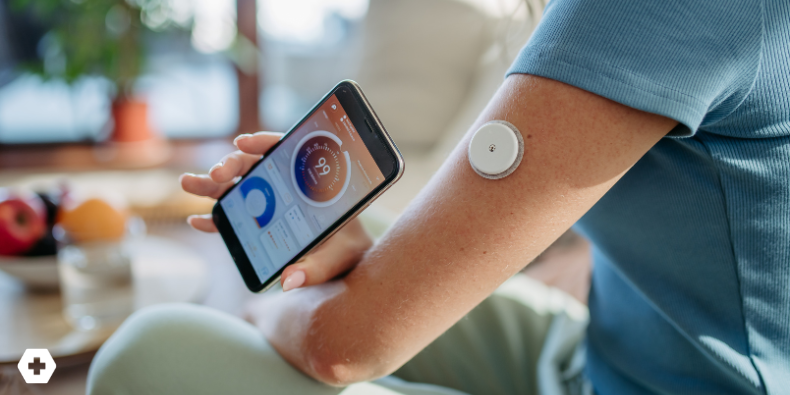
CGMs generally consist of a sensor (inserted into the skin) and a transmitter that sends data to a receiver or smartphone app. Most patients today use an app rather than a dedicated receiver. The latest models, like Dexcom G7 and Libre 3, transmit data continuously in real-time.
When you’re introducing the idea to a patient, it helps to show them a picture and clarify that this is not an insulin pump. It’s a replacement for fingersticks, not an automatic medication delivery system. Frame it as a tool to better understand their own body — and make smarter choices based on real data.
Once you prescribe the device and insurance approves it, help your clinic prepare to interpret the data. Register your practice with the CGM manufacturer’s clinician platform (Dexcom Clarity or LibreView), and install any required software. This allows you to pull reports directly into your clinic’s system.
When a patient returns for follow-up, look for the Ambulatory Glucose Profile (AGP). This standardized one-page report includes:
-
Time in Range (TIR): Ideal is >70%. This reflects % of time between 70-180 mg/dL. TIR of 70% correlates to an A1c of 6.7-7%.
-
Time Below Range (TBR): Should be <4%. This is time <70 mg/dL.
-
Time Above Range (TAR): Goal is <25% above 180 mg/dL, and <5% over 250 mg/dL.
-
Glucose Management Indicator (GMI): An estimated A1c based on mean CGM readings.
-
Glycemic Variability: Target is ≤36%. High variability increases risk for complications.
The AGP also includes a visual overlay of glucose trends throughout the day, showing not just median values but the range and variability. The thinner the band, the more consistent the readings. The wider it is, the more fluctuation there is at that time of day.
If you’re new to interpreting CGM reports, consider creating a dot phrase in your EMR to remind yourself of target thresholds. It will make these visits easier and more consistent over time. It’s also a good idea to have a dot phrase to help you document that the patient is using the CGM and benefitting from it - insurance may require this information.
Takeaways for Primary Care
CGMs are now within reach for many of our patients with type 2 diabetes. And they’re worth the effort. We’re no longer limited to a quarterly lab value or a few fingersticks. We can see the full picture — and help our patients change the story.
For more about CGMs, listen to our Primary Care Reviews and Perspectives podcast episode, "CGMs: Everything You Need to Know - Part 1."

Practice-Changing Education
Experience education that goes beyond theory. Explore Hippo Education’s offerings below.